
By Wald
Production Supervisor & Application Engineer, ZHUOZHU Brand
Over the past two years, I’ve noticed a clear shift during site visits and technical discussions with industry peers. More and more design‑institute engineers and general contractors are now actively specifying PVC hollow roof sheets as the preferred roofing solution for steel‑structure factories, rather than automatically defaulting to the traditional “metal deck + rock wool” combination.
To be honest, as a manufacturing professional, I initially assumed this was purely cost‑driven. But after talking in depth with these engineers, I realised that the real decision‑maker is a fundamental difference in thermal logic. This product isn’t competing on “who is thicker” – it’s competing on “who is smarter”.
1. The Core Problem: Steel Factories Don’t Just Suffer from “Heat” – They Suffer from “Trapped Heat”
Steel‑frame buildings have an inherent characteristic: low thermal mass and fast heat transfer. Under direct sunlight, the roof surface temperature rises rapidly, and heat conducts quickly through the metal panels into the interior, creating an obvious baking effect.
The conventional solution is to block the heat – using rock wool or glass wool as insulation, relying on the material’s low thermal conductivity to keep heat out. This works, but comes with two unavoidable drawbacks:
- Cost penalty: high‑quality rock wool + foil facing + fasteners add a significant cost per square metre.
- Construction penalty: rock wool is moisture‑sensitive, easily damaged by foot traffic, prolongs installation, and over time suffers from settling and moisture degradation that reduce its thermal performance.
The reason engineers are turning to PVC hollow roof sheets is that they take a completely different approach – not “blocking”, but “dissipating”.
2. Structure Dictates Function: The Thermal‑Convection Logic of Rectangular Cavities
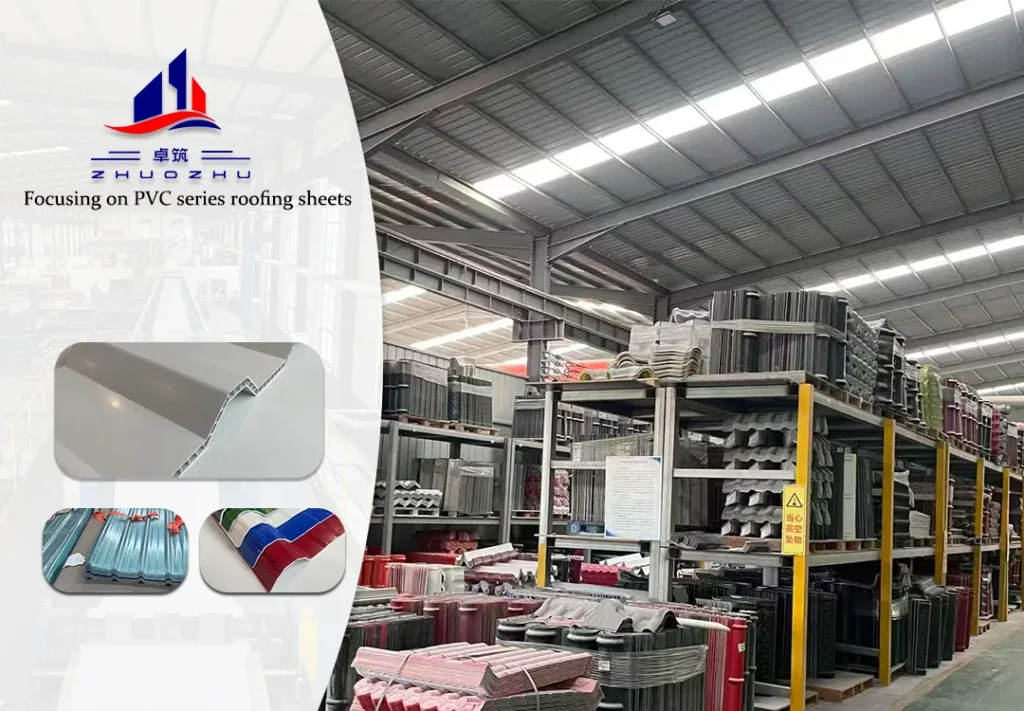
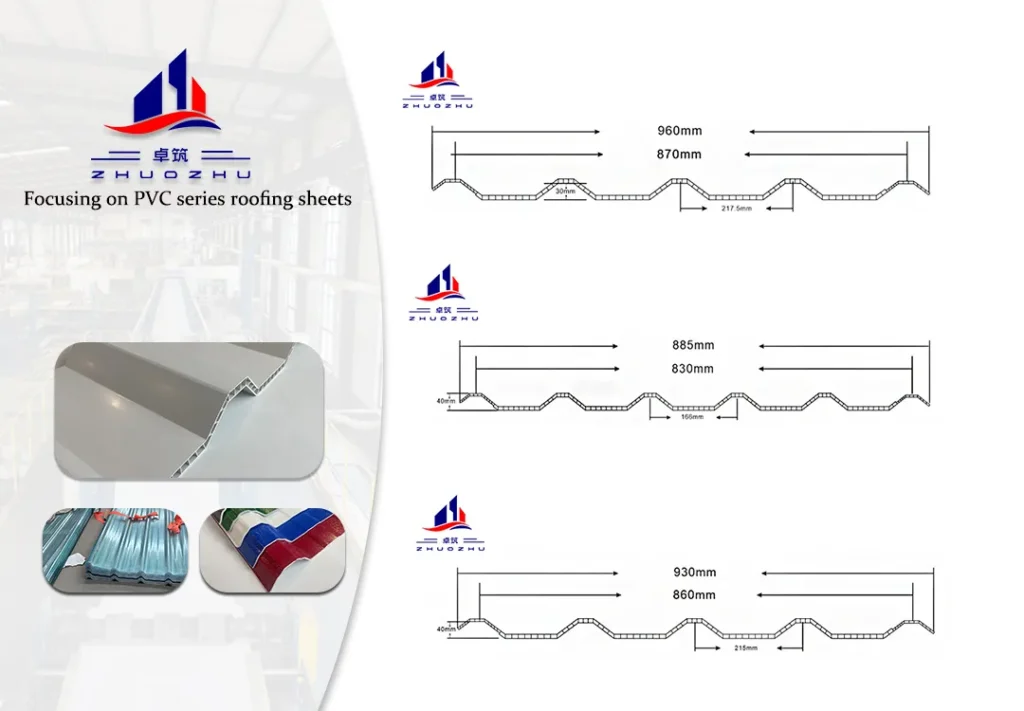
The cross‑section of a PVC hollow roof sheet is actually quite simple: two horizontal layers (top and bottom), with evenly spaced vertical supporting ribs in between, forming multiple independent rectangular through‑cavities.
But this seemingly simple geometry delivers a crucial thermal characteristic – air can flow freely inside the cavities.
When solar radiation heats the outer surface of the top layer, the heat is absorbed by the upper PVC skin. At that point, air inside the cavity warms up and rises, creating natural convection that carries the accumulated heat along the cavity length and exhausts it directly to the outside atmosphere at the roof edges.
In other words, heat is “carried away” before it ever has a chance to conduct through to the inner bottom layer. The heat flux reaching the interior side is substantially reduced.
3. Why Does This Logic Appeal So Much to Engineers?
During several conversations with design‑institute friends, they used three words that really stuck with me: “clean”, “defensible”, and “calculable”.
- Clean: no additional rock wool layer, no change to the primary structure purlin spacing – the roof build‑up is drastically simplified.
- Defensible: the principle of natural convection is basic heat‑transfer science, easy to explain to owners and plan‑checkers alike, with low communication friction.
- Calculable: by adjusting cavity height and wall thickness, we can design specifications that meet different regional thermal requirements – rather than simply “guessing” and adding more thickness.
More importantly, in non‑extreme high‑temperature regions (for example, most of the Yangtze River basin and areas further north in China), the natural‑convection cooling capacity of PVC hollow roof sheets is generally sufficient for summer insulation. After crunching the numbers, many engineers conclude that it makes more sense to invest in ensuring proper roof slope and clear cavity ventilation than to spend extra on rock wool with less certainty.
4. The Engineer’s Rationale: It’s Not Just About Insulation – It’s About Total System Benefits
Of course, engineers never base decisions on a single metric. Their preference for PVC hollow roof sheets often comes from a combination of multiple gains:
1. Structural Load Reduction
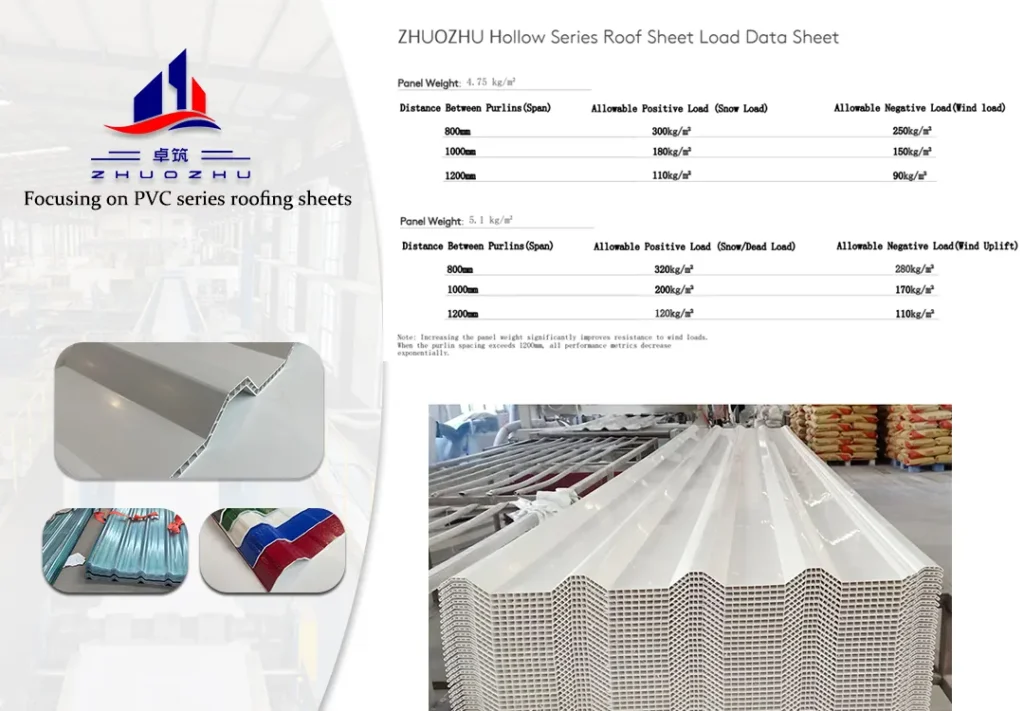
Metal deck + rock wool typically weighs 8–12 kg/m², whereas PVC hollow sheets weigh only 4–6 kg/m². This allows optimisation of the main steel structure and potential savings in foundation costs.
2. Faster Installation
No rock‑wool layer, no vapour barrier, and no worries about moisture‑induced performance loss. The one‑step laying process significantly shortens roofing construction schedules.
3. Long‑Term Stability
PVC is inherently corrosion‑resistant and moisture‑resistant – it won’t rust or perforate like metal panels in coastal or industrial corrosive environments. The hollow structure does not absorb water, and unlike rock wool, it won’t settle over time, creating thermal bridges at the top.
4. Daylighting and Energy Savings
By adjusting the formulation and colour, PVC hollow sheets can also provide some natural daylighting, reducing artificial lighting during the day – an additional energy‑saving benefit beyond thermal performance.
5. One Easily Overlooked Detail: Installation Quality Determines Heat‑Dissipation Performance
As an engineer who came up through the production line, I have to be honest: the cavity‑ventilation effect is highly dependent on installation quality.
If the roof slope is too shallow, the cavity outlets are blocked, or the eaves closure is made too airtight, the hot air cannot escape – and the cooling effect will be significantly compromised. In our post‑project reviews, we consistently found that the best results came from projects where the contractor followed the drawings precisely and ensured free inlet and outlet paths for the cavities.
That’s why I always emphasise to our clients: product is the foundation, but installation is the key. ZHUOZHU provides detailed shop drawings and technical guidance, but on‑site execution still requires close cooperation from all parties.
6. When Is It Not the Right Choice?
To be fair, PVC hollow roof sheets are not a universal solution.
In persistently hot regions (e.g., tropical or subtropical areas with long, intense summers), or in factories with strong internal heat sources (such as foundries or glass‑processing plants), natural‑cavity convection alone may not be enough – additional insulation or mechanical ventilation may still be required.
However, even in those cases, the hollow‑cavity structure can serve as a first‑line thermal barrier, reducing the burden on downstream cooling systems – which is still a clear advantage over solid sheets.
Final Thoughts
More and more engineers are choosing PVC hollow roof sheets – not because they “beat” other options on any single extreme metric, but because they align more closely with the actual service conditions of steel‑structure factories, offer superior overall economic value, and deliver long‑term reliability in service.
As ZHUOZHU’s Production Supervisor and Application Engineer, I watch our extrusion line every day – the speed, the wall‑thickness uniformity, the cavity forming quality. I know better than anyone that a good sheet comes from precise coordination of formulation, temperature, traction speed, and cooling calibration. But what gives me even greater confidence is seeing these sheets finally installed on factory roofs, genuinely solving the issues that engineers care about most – using smarter structure to achieve more effective insulation.
If you are currently selecting a roofing system for a steel‑structure factory, I encourage you to put PVC hollow roof sheets into your calculations. Not because they are “new” – but because they are “right”.
About the Author
Wald is Production Supervisor and Application Engineer at ZHUOZHU, responsible for process optimisation and technical support for PVC roofing product lines, with extensive experience in polymer extrusion and steel‑structure building integration.