
When it comes to choosing the perfect roofing material for projects that require natural light, FRP (Fiberglass Reinforced Plastic) roofing sheets often emerge as the top contender. Whether you’re constructing a greenhouse, a carport, or an industrial warehouse, understanding the unique properties of FRP can help you make a durable and cost-effective decision.
At ZHUZHU, we specialize in high-quality translucent roofing solutions. In this guide, we’ll explore everything you need to know about FRP roofing sheets, from their key benefits to practical installation tips, and how they compare to other materials like standard PVC.
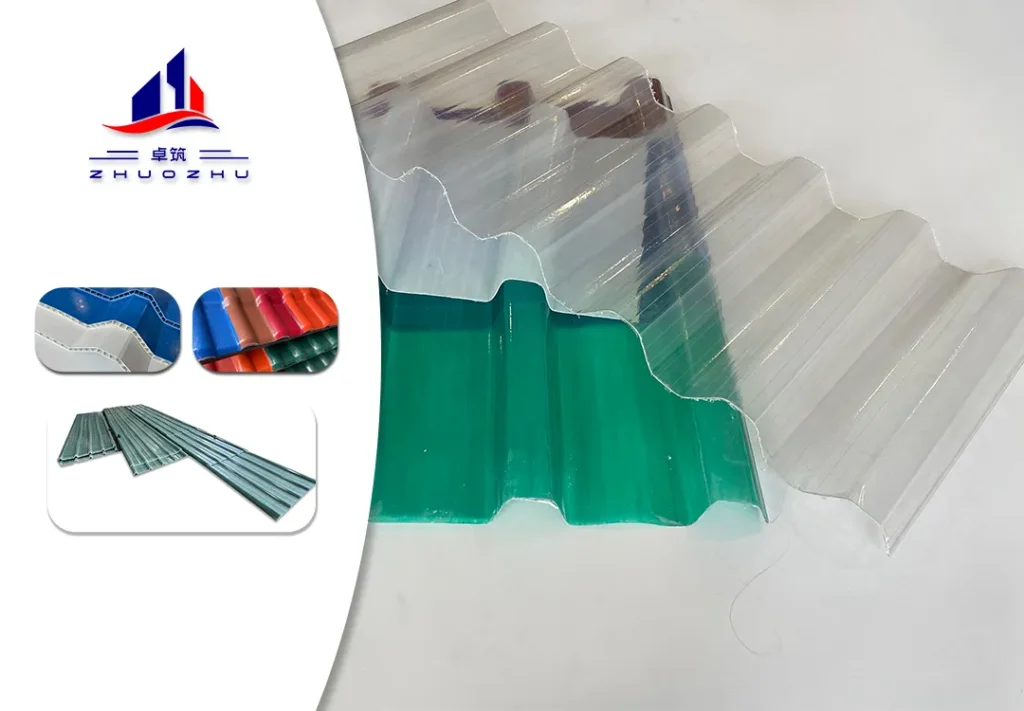
What is an FRP Roofing Sheet?
FRP stands for Fiberglass Reinforced Plastic. These sheets are manufactured by combining a polymer resin matrix with glass fibers, creating a composite material that is incredibly strong yet lightweight. The result is a roofing sheet that offers exceptional durability and, most importantly, high light transmission.
Unlike opaque materials, our FRP Transparent Roofing Sheet is designed to allow diffused natural light to pass through, reducing the need for artificial lighting during the day and creating a brighter, more inviting space below.
Key Benefits of Choosing FRP for Your Roof
1. Superior Light Transmission
The primary advantage of FRP sheets is their transparency. They can transmit up to 90% of natural light, which is ideal for:
- Greenhouses and Nurseries: Promotes healthy plant growth by providing essential sunlight.
- Warehouses and Factories: Reduces electricity costs by illuminating workspaces naturally.
- Canopies and Walkways: Creates bright, open-feeling covered areas.
2. High Impact Strength and Durability
Thanks to the fiberglass reinforcement, FRP sheets are exceptionally tough. They can withstand harsh weather conditions, including hail and heavy snow loads, without cracking or breaking. This impact resistance makes them a safer and longer-lasting option compared to some other translucent materials.
3. UV Protection and Weather Resistance
While letting light in, quality FRP sheets are also formulated to block harmful UV radiation. At ZHUZHU, our FRP sheets feature a protective UV-resistant coating that prevents yellowing and degradation over time, ensuring your roof remains clear and functional for years. They are also resistant to corrosion and chemicals, making them suitable for agricultural and industrial environments.
4. Lightweight and Easy to Install
Despite their strength, FRP sheets are lightweight. This makes them easier to transport, handle, and install, reducing labor costs and the need for heavy support structures. For simple installations, they can often be cut and fitted with basic tools.
FRP vs. Other Roofing Materials: Making the Right Choice
Understanding how FRP compares to alternatives helps in selecting the right product for your specific project.
- FRP vs. Polycarbonate: While both are translucent, FRP generally offers better impact resistance and is more cost-effective for large-scale industrial applications. Polycarbonate can be more flexible but may be prone to scratching.
- FRP vs. Solid Metal Sheets: Metal roofs provide no light transmission. If natural lighting is a goal, you would need to install skylights or integrate FRP panels as “light panels” within a metal roof system.
- FRP vs. Standard PVC Sheets: This is a crucial comparison. While our PVC Resin Roofing Sheet is an excellent, durable option for areas where opacity and cost-effectiveness are key, FRP is the specialist for projects demanding high light transmission. For patios where you want both shade and some light, a PVC Hollow Roofing Sheet might suffice, but for a greenhouse where plant growth depends on sunlight, FRP is the superior choice.
Common Applications for FRP Roofing Sheets
The unique properties of FRP make it a versatile material for a wide range of projects:
- Agricultural Buildings: Greenhouses, poultry houses, and livestock barns benefit from the natural light and durability.
- Industrial Facilities: Factories and warehouses use FRP panels for skylights and clerestory windows to save energy.
- Commercial Spaces: Shopping malls, bus stops, and covered walkways use FRP to create bright, welcoming areas.
- Residential Projects: Homeowners choose FRP for patios, pergolas, pool enclosures, and carports to enjoy outdoor spaces with natural light and weather protection.
Installation Tips for Long-Lasting Performance
Proper installation is key to maximizing the lifespan and performance of your FRP sheets.
- Overlap Correctly: Ensure side laps and end laps are sufficient to prevent water leakage. A general rule is one full rib for side laps and at least 200mm for end laps, sealed with appropriate tape or sealant.
- Use the Right Fasteners: Always use screws with neoprene washers specifically designed for roofing sheets. Do not over-tighten the screws, as this can cause the material to crack around the hole.
- Pre-Drill Holes: To accommodate thermal expansion and contraction, pre-drill your fastener holes slightly larger than the screw diameter.
- Allow for Thermal Movement: FRP expands and contracts with temperature changes. Ensure your fasteners are placed in the center of the pre-drilled holes to allow for this movement.
Conclusion
FRP roofing sheets offer an unbeatable combination of natural light transmission, strength, and durability. Whether for a commercial, industrial, or residential project, they provide a smart, energy-efficient solution. By understanding your specific needs—be it light transmission for a greenhouse or impact resistance for a factory—you can confidently choose FRP as your go-to material.
Explore our range of high-quality roofing solutions today, and see how ZHUZHU can help you bring your next project to light.