
PVC Hollow Roofing Sheet
- Thickness: 10mm (customizable)
- Standard Length: 2m - 12m (customizable)
- Actual Width: 960mm/930mm/885mm
- Effective Width: 870mm/870mm/830mm
- Wave Pitch: 217.5mm/217.5mm/166mm
- Wave Height: 40mm/40mm/40mm
YOUR RELIABLE MANUFACTURER AND SUPPLIER OF HEAT INSULATION HOLLOW ROOF PANELS FROM CHINA
ZHUOZHU is a professional manufacturer and supplier of insulated hollow roofing panels in China. Through innovative multi-cavity structural design and high-performance polymer materials, we provide roofing solutions with superior insulation performance and structural reliability. Our products utilize unique air-insulated technology to significantly reduce the thermal conductivity coefficient, while maintaining lightweight characteristics and ease of installation. They are suitable for various energy-saving building projects, including industrial plants, commercial buildings, and high-end residences. We insist on end-to-end quality control from raw materials to finished products, equipped with customized production capabilities and a global supply chain, committed to providing customers with durable, energy-efficient roofing systems, safeguarding the energy future of every building with our “Made in China” quality commitment.
PVC Roof Panels
Hollow Roofing Sheet
1. Superior Thermal Insulation Performance
Featuring a multi-layer air cavity structural design, the thermal conductivity coefficient is as low as 0.18–0.22 W/(m·K). This blocks over 85% of solar radiant heat in summer and reduces indoor heat loss by 60% in winter, effectively lowering building energy consumption by 40%–50%.
2. Lightweight and High-Strength Structural Characteristics
With a density of only 20% of traditional concrete tiles (approximately 4.2–5.8 kg/m²) and a flexural strength exceeding 18 MPa, it achieves structural lightweighting while maintaining excellent load-bearing capacity, reducing the required roofing support structure by 30%.
3. Efficient Rainwater Drainage System
Equipped with a patented drainage channel design and a multi-tiered drainage pathway, it enables rapid layered drainage of rainwater on the roof. Its wind pressure resistance reaches over 3.5 kPa, and it has passed simulated tests for extreme weather conditions equivalent to 100-year rainstorms, ensuring reliable waterproofing under severe conditions.
4. Acoustic Noise Reduction and Environmental Adaptability
The multi-layer cavity structure reduces external noise by 28–35 decibels. Made from specially formulated materials, it withstands temperature fluctuations from -40°C to 120°C, achieves a UV aging resistance rating of Level 8, and offers a service life of over 30 years.


CONTACT US
Top PVC & FRP Roof Sheet Manufacturers/Suppliers from China
Hollow Roofing Sheets: An Integrated Solution for Energy Efficiency and Structural Innovation in Modern Construction
Technological Evolution: From Traditional Materials to Multifunctional Systems
Hollow roofing sheets represent a significant innovation in 21st-century building materials, marking a technological leap from single-function coverage to multifunctional integration in roofing systems. Unlike conventional solid materials, these multi-chamber composite panels fundamentally transform roof performance while redefining building envelope standards. With global energy efficiency requirements intensifying and green building concepts gaining widespread adoption, hollow roofing sheets are rapidly advancing across industrial, commercial, and high-end residential sectors through their unique technical advantages.
Convergence of Material Science and Structural Design Innovation
Multi-Layer Composite Structure Technology
Modern hollow roofing sheets utilize a sophisticated three-layer composite design:
External Protective Layer: 0.8–1.2 mm thick ASA or polycarbonate material providing UV protection and mechanical durability
Intermediate Cavity Layer: 6–12 independent air chambers forming stable thermal barriers
Internal Functional Layer: Integrated anti-condensation coating with reinforcement rib structure
Thermal Performance Optimization Mechanism
Through computational fluid dynamics-optimized chamber configuration, the system achieves:
92% air convection suppression efficiency
78%–85% radiant heat reflectance
8–10 hour thermal lag period
Seasonal heat transfer coefficient (U-value) stabilized at 0.20 ± 0.02 W/(m²·K)
Engineering Analysis of Six Core Technical Advantages
1. Breakthrough Thermal Performance
Hollow roofing sheets attain thermal resistance values of R-5.6/m²·K—7–8 times superior to traditional concrete roofing. Field applications demonstrate:
Summer surface temperature reductions of 28–35°C
Winter heat loss reduction of 60%–65%
Overall building HVAC load reduction of 30%–40%
Annual energy savings equivalent to 2,800–3,500 kWh per 100 m² roof area
2. Lightweight Structural Efficiency
At only 15%–20% the density of traditional materials yet achieving 18–22 MPa flexural strength, these sheets deliver multi-dimensional value:
Roof dead load reduced to 35–50 kg/m² (versus 200–240 kg/m² for concrete)
Primary steel structure requirements decreased by 25%–30%
Foundation costs reduced by 18%–22%
Ideal for building retrofits without structural reinforcement needs
3. Intelligent Drainage and Climate Adaptation
The bionic-inspired three-dimensional drainage system features:
180 L/(min·m) drainage capacity per unit width
ASTM E1592-certified wind uplift resistance to 200 km/h
Compliance with DIN EN 13859-1 heavy rain standards
Self-cleaning surfaces reducing 5-year maintenance by 80%
4. Acoustic and Environmental Optimization
Laboratory validation confirms:
38 dB average sound insulation (125–4,000 Hz frequency range)
Rain noise reduction to 28–32 dB(A)
Material linear expansion coefficient of 7.2 × 10⁻⁶/K
QUV accelerated aging test compliance (3,000 hours, ΔE < 2.0)
5. Industrialized Installation and Lifecycle Economics
Modular design enables:
120–180 m² daily installation per work crew
65% reduction in connection hardware
On-site waste controlled below 3%
70% lower maintenance costs over 30-year lifecycle
6. Sustainability and Circular Economy Contributions
Environmental performance metrics include:
96% material recyclability rate
65% lower production energy versus traditional materials
60% reduced transportation carbon emissions
92% photovoltaic integration efficiency for BIPV applications
Engineering Applications and Performance Validation
Industrial Facility Implementation: Automotive Manufacturing Complex
Project Scale: 45,000 m² roofing system
Technical Solution: Double-layer hollow sheets with integrated photovoltaics
Documented Outcomes:
4.8°C average summer temperature reduction
42% annual cooling energy reduction
380,000 kWh annual photovoltaic generation
4.2-year investment payback period
Commercial Retrofit: Regional Shopping Center
Challenge: Structural load limitations in existing construction
Solution: Lightweight hollow sheets replacing conventional materials
Verified Results:
180-ton roof load reduction
¥850,000 structural reinforcement savings
Indoor thermal comfort PMV index optimized to ±0.5
12-point LEED Gold certification contribution
Technical Standards and Quality Assurance
International Compliance Framework
Thermal Performance: ASTM C518, ISO 8990
Structural Performance: EN 1013, JIS A 6902
Durability: ASTM G154, ISO 4892-3
Fire Safety: EN 13501-1, GB 8624 Class B1
Quality Management Protocols
100% raw material batch certification
18 critical process control points
32-point finished product inspection
Third-party validation per 5,000 m² production
Installation Technology and Construction Specifications
Standardized Installation Methodology
Phase 1: Substrate Preparation
  - Purlin alignment verification (±3 mm/2 m tolerance)
  - Weather barrier integrity assessment
  - Mounting hardware positioning

Phase 2: Primary Installation
  - Wind-direction optimized starting position
  - Precision fastener installation (8–10 N·m torque)
  - 150 mm minimum horizontal overlap

Phase 3: Detailing Completion
  - Ridge joint sealing systems
  - Penetration perimeter waterproofing
  - Comprehensive system testing
Critical Technical Controls
Thermal expansion gaps: 2.5 mm/10 m (summer), 3.5 mm/10 m (winter)
Fastener spacing: Longitudinal ≤800 mm, transverse ≤1,500 mm
Sealant specification: Structural silicone with ±50% movement capability
Acceptance criteria: 2-hour full-system water testing
Maintenance and Performance Monitoring
Systematic Maintenance Framework
Quarterly: Connection integrity, sealant condition
Annual: Surface cleaning, drainage verification
Triennial: Thermal performance validation, structural assessment
Decadal: Comprehensive system evaluation and maintenance planning
Digital Monitoring Integration
Optional IoT systems provide:
Real-time thermal mapping (one sensor per 50 m²)
Structural stress monitoring
Drainage performance tracking
Cloud-based analytics and predictive maintenance
Future Technological Trajectories
Advanced Material Integration
Phase-change materials: 180 kJ/kg energy storage density
Thermoelectric conversion: 8%–12% efficiency
Photochromic adjustment: 30%–80% variable transparency
Self-healing surfaces: ≥85% micro-damage repair
Digital Manufacturing Advancements
Customized 3D printing production
Digital twin-guided installation
AI-optimized chamber geometries
Blockchain-enabled material traceability
Value Enhancement Assessment
Property value appreciation: 8%–12%
Insurance premium reduction: 15%–20%
Green certification contributions: 8–15 LEED/BREEAM points
Corporate ESG rating improvement
Industry Applications and Market Development
Strategic Implementation Areas
Advanced Manufacturing Facilities: Meeting stringent clean room and smart factory specifications
Data Center Construction: Resolving high-density thermal management challenges
Cold Chain Infrastructure: Achieving precise environmental control with energy efficiency
Urban Regeneration: Primary solution for existing building energy retrofits
Market Projections
Global Market Value: $8.5 billion by 2025
Annual Growth Rate: 12%–15%
Asia-Pacific Market Share: 45%–50%
Chinese Market Expansion: 18%–22% annual growth
Conclusion: Redefining Roofing System Performance Parameters
Hollow roofing sheets represent more than material innovation—they constitute a fundamental reimagining of building envelope technology. By resolving the inherent conflicts between energy efficiency, structural weight, durability, and economic feasibility in traditional systems, these advanced panels establish new benchmarks for integrated building performance.
As global construction embraces carbon neutrality objectives and sustainable building standards become normative, the technological superiority of hollow roofing sheets translates directly into competitive market advantage. For building owners, this represents strategic capital allocation toward lifecycle value optimization. For design professionals, it provides sophisticated tools for creating high-performance architectural solutions. For the broader industry, it catalyzes advancement across materials science, manufacturing technology, and construction methodology.
Selecting hollow roofing sheets signifies adopting systems-thinking to address building energy challenges, deploying innovative technologies to generate sustainable value, and applying professional expertise to create enduring architectural quality. Within the evolving paradigm of built environment responsibility, hollow roofing sheets will play an increasingly pivotal role in harmonizing architectural performance with environmental stewardship, establishing themselves as essential components in the sustainable buildings of tomorrow.
CUSTOM MANUFACTURER
A leading FRP & PVC roofing sheet manufacturer in China, dedicated to providing roofing system solutions, with over 20 years of outstanding manufacturing experience.
3
Advanced Manufacturing Facilities
36
103
103
Product Center
Explore our comprehensive roofing products, including 3 main collections and a variety of product finishes, designed to meet any need for modern building roofing.
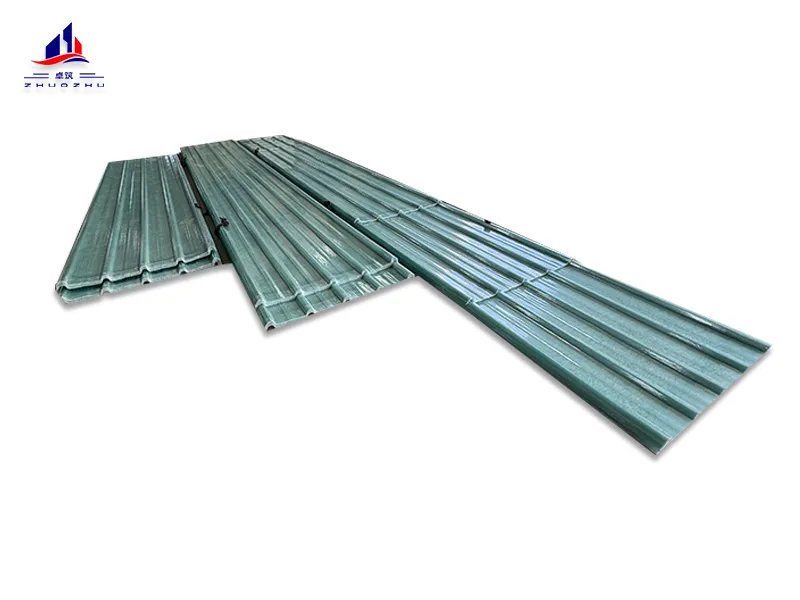
GFRP Roof Sheet / Glass Fiber Roof Tile / Transparent FRP Roof Panel
This allows sunlight to be scattered multiple times, transforming the dazzling sunlight into soft light that illuminates a larger area.
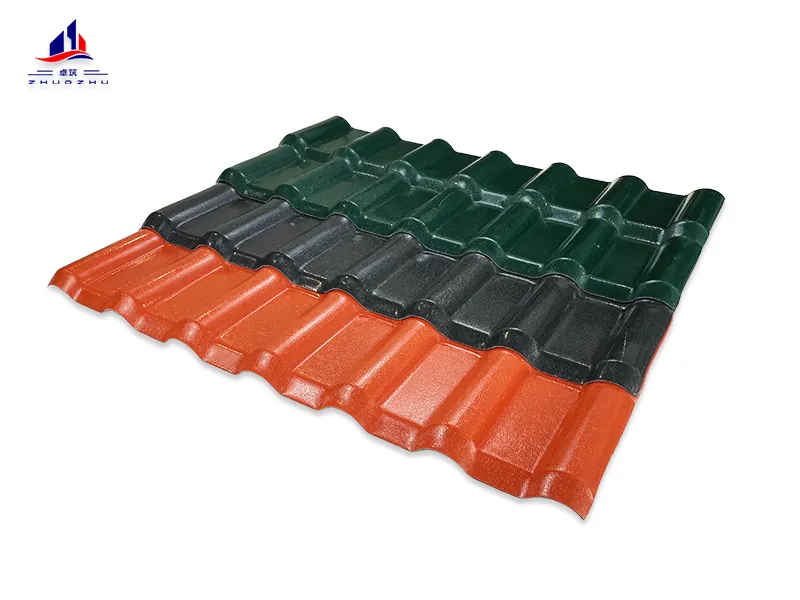
UPVC Roof Sheet / PVC Roof Tile/ ASA UPVC Roof Panel
It will not change color for 10 years, is flame retardant, heat-insulating, corrosion-resistant, and low-temperature resistant.
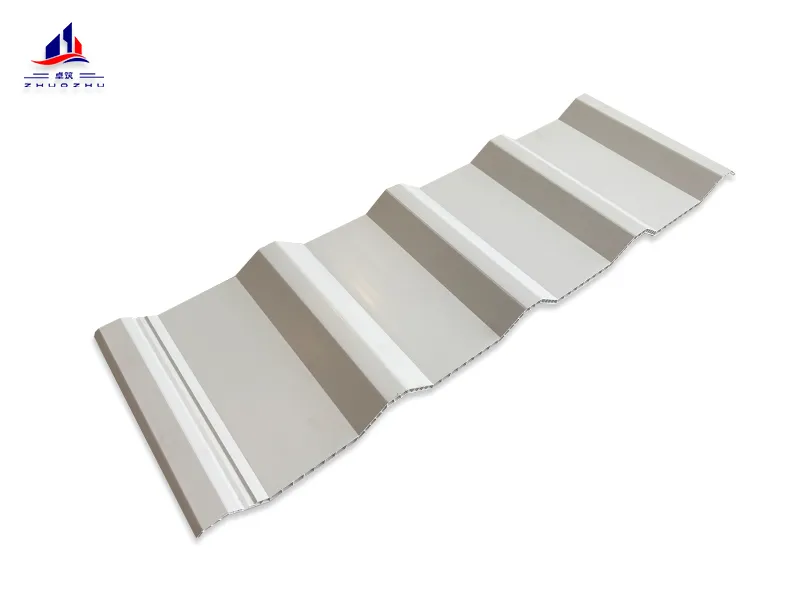
Hollow Roofing Sheet / Hollow PVC Roof Tile / Hollow Roof Panel
Its hollow design gives it excellent heat insulation, ensuring a comfortable indoor temperature.
ZHUOZHU Blog
We aim to be your reliable information partner, consistently sharing practical blog articles, timely industry updates, and forward-looking new product information. With thoughtful content, we will accompany every step of your growth in the thermal insulation materials industry.

